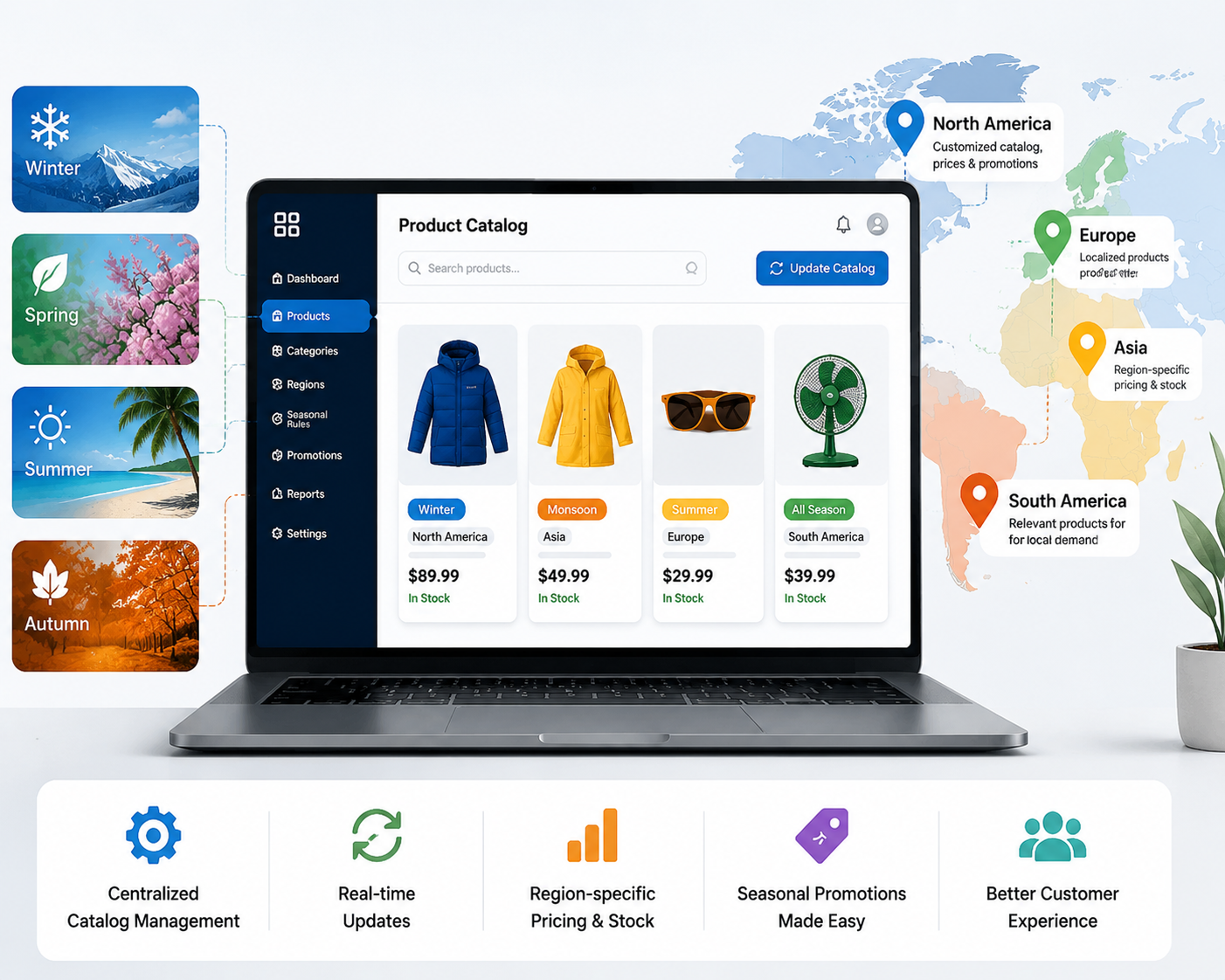
Digital Catalog Software manages regional and seasonal product catalogs by helping businesses organize product information based on location, weather, and seasonal demand. It lets companies easily update rates, stock, and promotions for changed markets without errors. Instead of fixed spreadsheets, businesses can use smart catalogs that update automatically across all platforms in real time. This restores accuracy, reduces confusion, and helps businesses respond quickly to seasonal and regional changes.
As companies grow globally, manual catalog management becomes slow and error-prone. Digital systems offer automation, consistency, and easy scaling. It also improves client experience by showing the correct products.
Unified Product Data Management System
A Unified Product Data Management System helps to have all product information simple and organized. It removes misperceptions caused by using multiple spreadsheets, outdated files, and separate tools. Everything is stored in one place, so data stays right and up to date. All teams, such as sales, marketing, and operations, can easily use the same info.
• Have all product facts in one organized database
• Remove repeated or incorrect product entries
• Recover data accuracy across all teams and locations
• Let fast updates from one central dashboard
This system is very supportive for global businesses as it saves time and improves teamwork.
Flexible Regional Product Adjustments
Flexible Regional Product Adjustments make it easier for businesses to sell in new countries. Each market has different client requirements, prices, and instructions. A product that works well in one country may require changes to its description, rate, or availability in another country. With digital catalog management, businesses can update product facts for each region without changing the key product info.
This method makes work quicker and easier. It benefits companies to reuse the same product information and change only things like language, pricing, and promotions for each region. It also lessens manual work and mistakes. Businesses can grow more quickly, comply with local regulations, and provide clients with a more personal shopping experience. It has all product information in a single system and allows easy regional changes while keeping everything accurate and well-organized.
Efficient Seasonal Catalog Planning
Seasonal changes are key to product demand, but manual systems often struggle to handle rapid fluctuations. Businesses demand a simple, smart way to manage seasonal updates without interruptions or errors. With catalog management software, seasonal planning becomes easy, orderly, and automatic.
• Plan seasonal product launches ahead of time
• Turn seasonal products on or off automatically
• Match stock with probable demand
• Plan holiday and festival campaigns promptly
• Avoid last-minute catalog changes
For instance, if it gets cold, winter products will automatically appear in cold regions as demand increases, and summer products can be removed without manual action. This helps firms stay on schedule, reduce errors, and improve customer satisfaction.
Overall, automated seasonal catalog planning ensures the right products are shown at the right time, increasing sales and keeping businesses competitive year-round.
Accurate Product Data Synchronization
Accurate Product Data Synchronization means maintaining consistent product information across all sales channels. When data isn’t consistent across all channels, it can weaken client trust and hurt sales. For example, if a product has different prices or outdated descriptions across websites or apps, clients may become confused and stop purchasing. That’s why using product information management is very useful. It helps ensure that each update is swiftly shared across all systems.
With synchronized data, businesses can easily update ecommerce websites, mobile apps, online marketplaces, printed or digital catalogs, and distributor systems. This creates a system where all channels stay up to date in real time. Customers always get clear, accurate product information wherever they shop, which improves their experience and builds stronger trust in the brand.
Multi-Channel Catalog Distribution Control
Multi-channel catalog distribution control means keeping all product information in one place and sharing it across diverse selling platforms such as websites, apps, online stores, and social media. Today, people shop from various places, so businesses want to keep product details consistent across platforms.
Catalog management software benefits from this by updating all channels simultaneously. It saves time as there is no requirement to update each platform separately. It also reduces mistakes and maintains consistent pricing and branding. This makes it easier to launch new offers quickly and gives clients a better, smoother shopping experience.
Why Smart Catalog Management Is No Longer Optional?
As businesses grow, managing product catalogs by hand becomes tough. Small mistakes start happening and can disturb sales. Customers may realize incorrect or old product details. This can confuse people and decrease trust in the brand.
• Product info is not the same on all platforms
• Updates are slow throughout busy times
• Old catalogs can lead to lost sales
• Workload and prices become higher
A central catalog system helps fix these problems by keeping everything in one place. It ensures that all product details are accurate and up to date everywhere. This helps businesses work more effectively and keep clients happy. Smart catalog management is very significant for business success today. Companies that use it promptly can make fewer mistakes, save time, and provide a better shopping experience.
Conclusion
In conclusion, managing regional and seasonal product catalogs is now a key business task, not just simple data work. Markets change fast, so businesses want systems that can adapt quickly rather than work gradually. With catalog management software, companies can keep all product data in one place, create separate catalogs for different regions, and automatically update seasonal products. It also helps keep product information accurate through product info management and shares product details easily across all sales channels without complications.
This makes work easier, lessens mistakes, and saves time. Companies that still rely on manual approaches often face outdated information, higher prices, and missed sales. But businesses that use up-to-date catalog systems can grow more quickly,
work more efficiently, and deliver a better client experience. In the end, using a centralized product catalog system is not only an improvement but also very significant for long-term development and stable business performance.
Frequently Asked Questions