
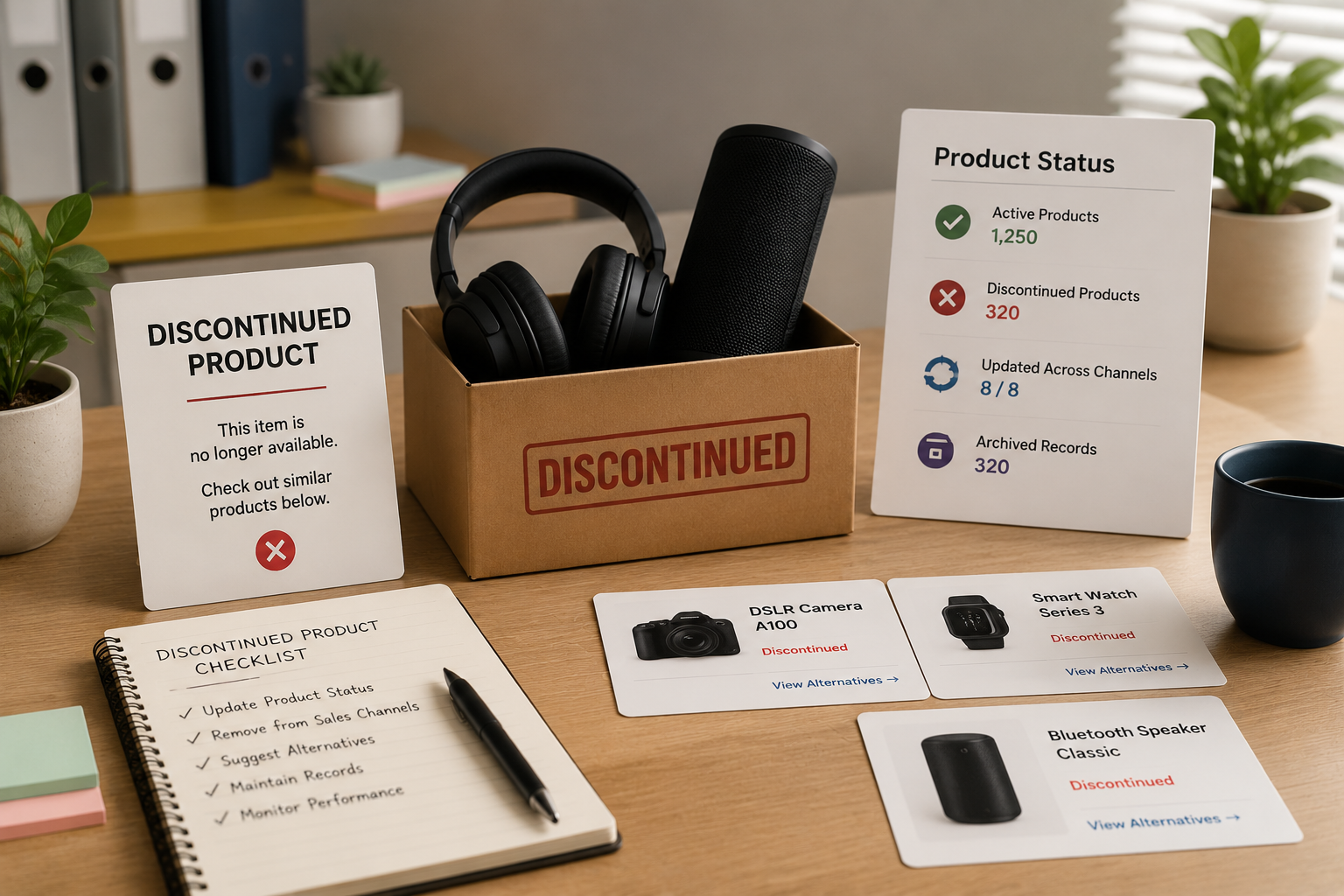
Handling discontinued products is not as simple as removing them from your inventory. If a product is listed on multiple online stores, marketplaces, or sales channels, outdated information can confuse clients and cause order complications. Catalog management software benefits businesses by updating, hiding, or removing discontinued products across all platforms. This helps prevent canceled orders, keeps clients happy, and keeps your product catalog neat and accurate.
Why Is It Important to Manage Discontinued Products?
Common reasons why products are discontinued:
- The manufacturer no longer creates the product.
- A new model has replaced the old one.
- Fewer clients want to purchase the product.
- It is a seasonal product and is no longer available.
- The product is forever out of stock.
1) Automatically Marks Products as Discontinued
Benefits include:
- Stops clients from purchasing unavailable products.
- Saves time because staff don’t have to update each website manually.
- Keeps inventory correct by updating product info across all platforms.
- Reduces manual work and helps avoid mistakes.
- Gives customers accurate product information before they place an order.
- Keeps the product catalog clean and organized by removing outdated listings.
2) Removes Products from Sales Channels
Catalog management software helps businesses save time by automatically removing discontinued products from all sales channels. Whether a business sells through an online store, marketplace, mobile app, social media shop, or dealer website, the software updates across all platforms at the same time. When a product is marked as discontinued, it is automatically hidden or removed across all platforms.
3) Preserves Old Product Information
Businesses may need old product information for:
- Previous client orders
- Warranty claims
- Financial reports
- Tax records
- Client support
- Sales and product performance reports
4) Suggests Replacement Products
For example:
- A discontinued laptop shows the up-to-date laptop model.
- An old smartphone links to the new version.
- A retired clothing item displays a similar style.
- A discontinued appliance recommends a newer model.
- A discontinued printer recommends a better printer.
- An out-of-stock furniture item displays similar items that are available.
5) Updates Inventory Across All Systems
It’s more difficult to maintain accurate stock as a company expands and expands into various channels. If a product is discontinued, all related systems need to be updated simultaneously. Catalog management software does this automatically. It updates warehouse systems, inventory software, online stores, POS systems, and ERP software through seamless ERP integration, keeping product information consistent across all sales channels.
6) Protects SEO While Managing Product Pages
Many discontinued products still appear in search engine results and can still take people to your website. If you delete these pages, you can lose website visitors and create broken links. Catalog management software benefits businesses by helping them manage these pages without hurting their SEO or consumer experience.
- Saves the product page online with a clear “Discontinued” message.
- Displays similar or replacement products for clients.
- Sends visitors to newer products when required.
- Removes the Buy Now button but keeps important product info.
- Saves product details for client support and future reference.
7) Provides Reports on Discontinued Products
Reports usually show:
- Which products were discontinued
- Why the products were removed
- Past sales performance
- Remaining stock
- Client demand
- How long the product stayed in the catalog
These reports help businesses plan their future inventory and product launches more quickly and successfully.
Additional Benefits of Catalog Management Software
Best Practices for Managing Discontinued Products
Managing discontinued products correctly helps businesses keep their product catalog organized, reduce client confusion, and maintain accurate product information. These simple instructions also help restore inventory management, protect website traffic, and provide clients with a better shopping experience.
- Do not delete products right away: Move discontinued products to an archive instead of removing them. Old product info can still help with reports, consumer support, and warranty claims.
- Suggest similar products: Show clients similar or newer options so they can easily choose an alternative.
- Keep inventory updated: Update stock info on all sales channels as soon as a product is discontinued. This helps stop clients from buying unavailable products.
- Protect SEO: Keep common product pages online with a clear “Discontinued” message and links to replacement products.
- Check reports regularly: Review reports to know product trends, make better purchasing choices, and improve inventory planning.
Conclusion
In conclusion, each business should manage discontinued products correctly to keep its product catalog accurate and easy to use. Instead of removing products, businesses should update stock levels, save product records, protect SEO, and suggest similar or replacement products. Catalog management software simplifies this process by automatically updating product info and keeping it consistent across all sales channels. It also saves time, reduces manual work, stops mistakes, and improves the client shopping experience.