
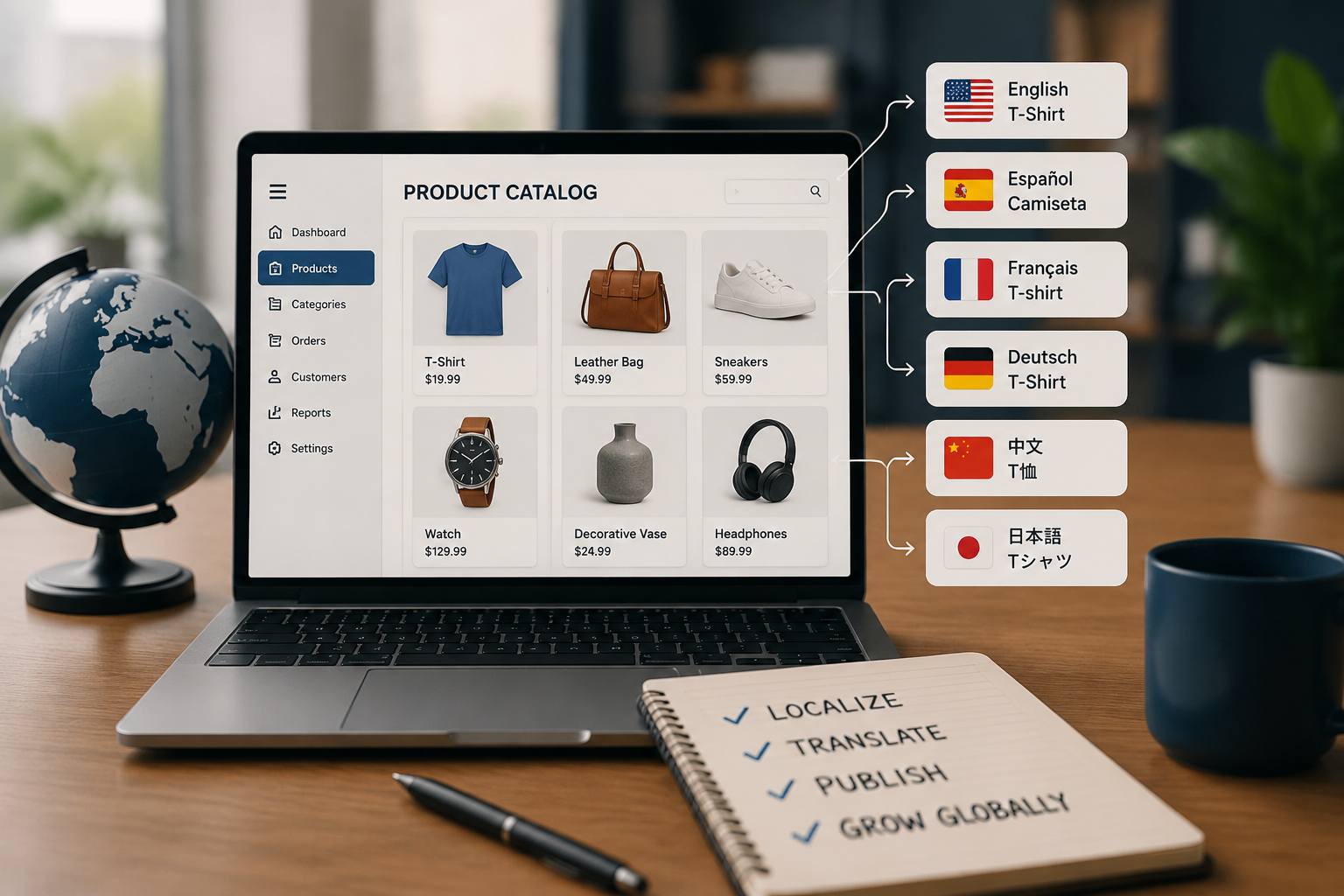
Expanding your business to different countries is more than just translating product descriptions. You want a multilingual product catalog with accurate, clear product info that’s consistent across languages. A well-managed catalog helps clients find products easily, increases their shopping engagement, supports international SEO, and makes product updates faster.
What Is a Multilingual Product Catalog?
A multilingual product catalog is a product database that displays product information in different languages. It has all the product details in one central place, rather than creating separate catalogs for each country or language. Each product has one key record, while product names, descriptions, and other content are available in different languages. Many businesses use product information management (PIM) systems to maintain accurate product records and manage multilingual product details from one centralized location. Important facts like SKU, specifications, dimensions, and categories stay the same for each language.
A multilingual product catalog can include:
• Regional rates, currencies, and legal info
Common Examples of Global Multilingual Catalogs
Many businesses sell their products in different countries using multilingual product catalogs. They have all the product info in one place but show it in the client’s language. This makes shopping easier and helps customers trust the products.
• Food and beauty brands translate ingredients, labels, and product descriptions to follow local instructions.
Translation vs. Localization: Understanding the Difference
Machine Translation
Human Translation
Hybrid Workflow
Full Localization
• Best for countries with different client needs or legal necessities.
More Than Words: Elements That Need Localization
Many people think localization only means translating product descriptions. But a product catalog also needs other changes to match the language, culture, and instructions of different countries. These changes help clients know products more easily and build trust.
- Product Titles and Descriptions: Use simple words that local clients know and search for.
- Product Details and Specifications: Change sizes, measurements, and product specifics to match local standards.
- Categories: Arrange products in categories that make sense to local shoppers.
- Prices, Currency or Units: Show local currency, taxes, and measurement units.
- Images and Visuals: Use pictures, icons, or symbols appropriate for local clients.
- Buttons and Legal Information: Update buttons, warnings, and legal text to follow local laws.
- SEO Information: Translate page titles, meta descriptions, keywords, and URLs to help local consumers find products online.
Why Multilingual Catalog Management Can Be Challenging?
As your business grows, it becomes harder to manage product information across multiple languages. Every update, translation, and local change must be right in every language. Without a good system, mistakes can happen, and clients may see incorrect or outdated information.
- Maintaining Consistency: Make sure the same product information is right in every language.
- Frequent Product Updates: Update prices, stock, specifications, or product details in all languages whenever changes are made.
- Different Regional Requirements: Each country may have distinct requirements for directions, labels, certifications, and product information.
- SEO Management: Use the correct keywords, product titles, descriptions, and meta tags for every language.
- Large Product Catalogs: Managing thousands of products by hand is slow and can lead to more errors.
Step-by-Step Process for Managing Global Product Catalogs
Follow these easy steps to keep your product catalog correct in each language.
- Keep All Product Information in One Place: Store all product details in one central system, previously translating them.
- Use the Same Product Information: Have product names, categories, features, and details the same for all products.
- Keep the Original Version: Use the original language as the key version. Make all future updates from this copy.
- Translate Product Content: Translate product names, descriptions, structures, or other product information.
- Update Information for Each Country: Change rates, currency, measurements, legal details, or other information to match every local market.
- Check the Translation: Have a native speaker review the content to ensure it’s correct and easy to understand.
- Publish Everywhere: Share the translated product info on your website, online stores, or other sales channels.
- Update Regularly: Whenever a product changes, update each language version to keep all info correct and consistent.
SEO Tips for Multilingual Product Catalogs
A multilingual product catalog works better in search engines when each language version is correctly organized. This helps search engines display the correct page to the correct people. As a result, your products become easier to find, get more visitors, and rank higher in search results.
Use Hreflang Tags: Tell search engines which language or country version of a page to display to users.
Target the Right Audience: Choose out whether your content is for a single language or a particular country.
Use a Clear URL Structure: Organize your website links so search engines can easily understand your catalog.
Avoid Duplicate Content: Make certain that similar pages in different languages do not compete with each other.
Use Local Keywords: Use the words people in each country actually search for rather than direct translations.
How to Measure Multilingual Catalog Performance?
A multilingual catalog workflow should help you keep product info correct and consistent in each language. By checking a few simple metrics, you can promptly identify complications, improve your workflow, or keep your catalog updated. This helps clients just to get the exact product information in each market.
1) Language Coverage
Make certain every product and all important details exist in every language.
2) Publishing Speed
Check how long it takes to update and publish product info in different markets.
3) Customer Activity by Region
Get how customers in every country use and interact with your localized product pages.
4) Sales by Market
Relate sales and conversions in changed regions to realize how well your localized catalog is working.
5) Content Quality
Search for missing details, translation mistakes, and content that needs to be fixed after publishing.
Software That Simplifies Multilingual Catalog Management
Choosing the right platform helps businesses handle increasing product volumes while maintaining consistent information across all markets. The right software helps save time and reduce mistakes.
Many businesses use tools like:
- Product Information Management (PIM)
- Content Management System (CMS)
- Translation Management System (TMS)
- Digital Asset Management (DAM)
- Ecommerce Platforms
- Catalog Publishing Software
Best Practices for Growing Global Product Catalogs
Supporting Multilingual Catalog Management with Publitas
Creating a Long-Term Multilingual Catalog Strategy
Conclusion
Creating and maintaining a multilingual product catalog is anything but easy, and it’s not just about translating words; it involves a complete approach that guarantees accuracy, consistency, and relevance across all markets. With centralized data management, multilingual SEO tactics, and efficient workflows, companies can build product experiences that resonate with customers globally and minimize operational issues.
Companies can expand their operations worldwide with confidence thanks to a well-implemented multilingual catalog management strategy. By implementing catalog management software, businesses can maintain product information accuracy, enhance collaboration, and provide multilingual shopping experiences. A well-designed and adaptable catalog solution can help brands enhance their global footprint, boost customer satisfaction, and remain competitive in global markets.
Frequently Asked Questions
Do I need a PIM for multilingual catalogs?
Yes. A PIM has product info organized and easy to update. It also helps businesses manage product data consistently across different languages and markets.
How often should I update my Catalog?
Update it each time product details, prices, or stock change. Regular updates ensure customers always receive accurate and reliable product information.
Can multilingual catalogs be automated?
Yes. Automation saves time and decreases manual work. It also helps maintain consistency and speeds up updates across multiple language versions.
How can I improve multilingual SEO?
Use local keywords, hreflang tags, and language-specific pages. These practices help search engines show the right content to users in different regions.
Which languages should I launch first?
Start with your major or most key markets. This allows you to focus resources on regions with the highest business potential.
Can I use different images for different markets?
Yes. Use images that match local requirements and preferences. Localized visuals can improve customer understanding and create a stronger connection with your audience.
How can I keep translations consistent?
Use a shared glossary and review each translation. A clear translation process helps maintain brand consistency across all markets.
Can I personalize catalogs for each region?
Yes. Show changed products, rates, or offers by region. Regional personalization helps customers find products that better match their needs and expectations.