
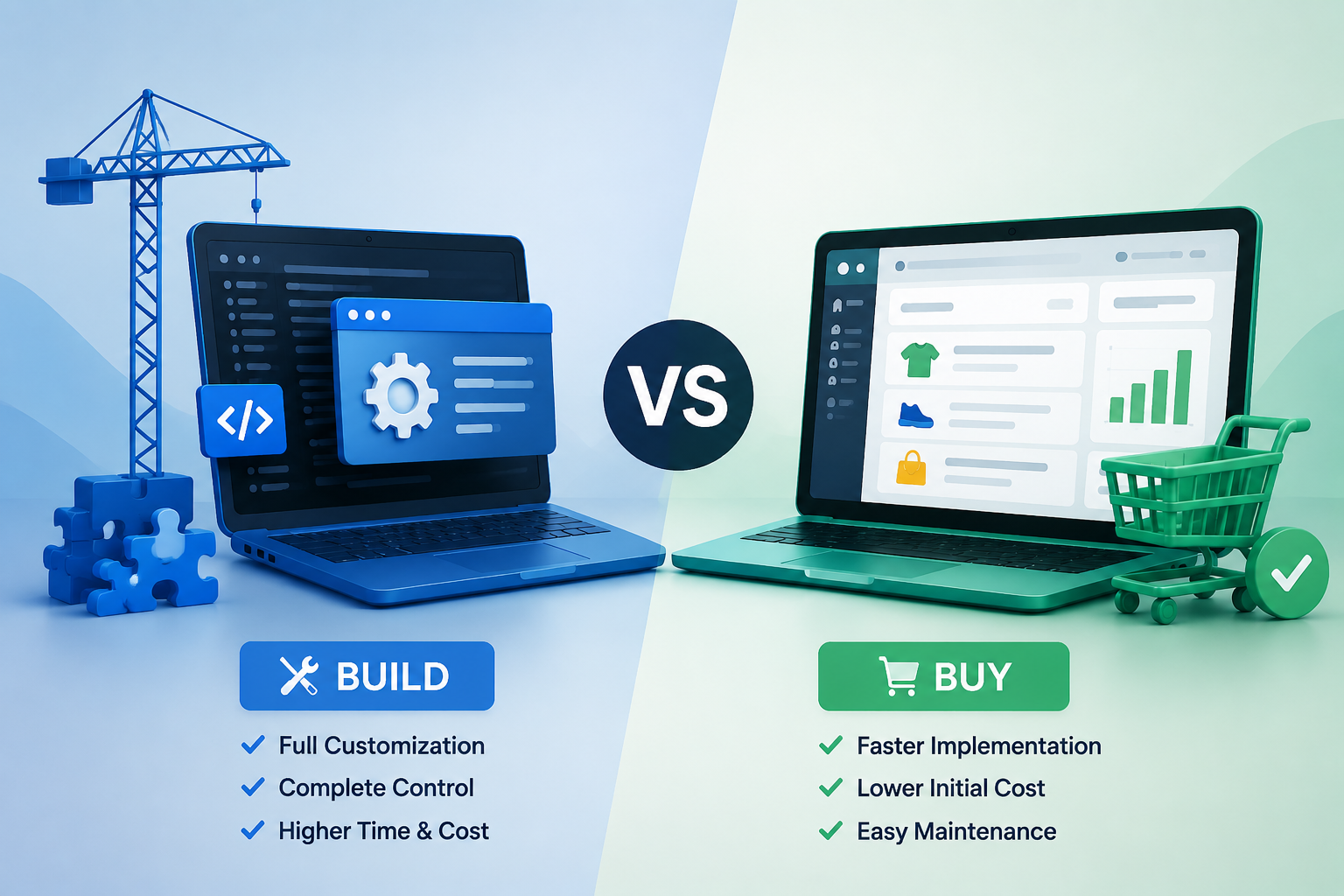
Build vs Buy Catalog Management Software: What Does Each Option Mean?
The process of building catalog management software involves creating custom-made software that precisely meets the company’s needs. Offers full control of features, integrations, and workflows, but also demands more investment, expertise, and maintenance.
Why Are Product Catalogs Harder to Manage Today?
Common challenges include:
- Managing different platforms: Businesses want to update product details on websites, Shopify stores, Amazon, Walmart Marketplace, eBay, or other channels.
- Avoiding mistakes: Manual updates can cause incorrect rates, outdated stock details, missing images, and improper product descriptions.
- Keeping details the same: Customers should see the right product information wherever they shop.
- Creating a better customer experience: Poor product info can confuse clients, lessen sales, and increase returns.
7 Reasons Businesses Need Catalog Management Software
1) Eliminates Data Silos Across Departments
Growing businesses frequently face problems as product information is stored in various places. Marketing, sales, warehouse, and client service teams may use different files, which can lead to mistakes, misperceptions, and outdated information. Catalog management software keeps all product details in one place, making it easy for everyone to find and use the latest information.
2) Improves Product Data Quality
Good product info helps customers pick products easily and trust the brand. Catalog management software helps businesses keep product details correct, complete, and consistent across all platforms. It reduces mistakes and improves the shopping experience.
- Finding missing product facts
- Keeping info in the same format
- Checking key product details
- Removing duplicate products
- Organizing product categories
3) Automation Reduces Manual Work
Key automation features include:
- Bulk editing: Update many products at the same time.
- Product imports: Add new product details quickly.
- Inventory synchronization: Keep stock details updated everywhere.
- Scheduled publishing: Automatically share updates at the right time.
- Marketplace updates: Send product information to online stores easily.
- Category assignments: Put products into the correct categories automatically.
- Image management: Add and update product images easily.
4) Supports Multi-Channel Selling
5) Makes Business Growth Easier
How it helps business growth:
- Managing more suppliers: Has supplier product info organized and easy to update.
- Handling multiple warehouses: Has stock details correct across different locations.
- Managing bigger product catalogs: Makes it simple to add, update, and organize many products.
- Serving global customers: Benefits managing product details in different languages and regions.
- Adding more marketplaces: Makes it easier to share products on new sales channels.
6) Better Product Information Increases Sales
Better product information from catalog management software increases sales because customers need clear and complete details before purchasing a product. When product pages have simple descriptions, specifications, images, sizes, availability, and compatibility details, clients feel more confident and are more likely to make a purchase. Catalog management software benefits businesses by creating and updating accurate product listings across changing sales channels. It ensures clients always get the same, up-to-date info on websites, marketplaces, or mobile apps.
7) Provides Long-Term Operational Value
Catalog management software isn’t just helpful for managing product facts. It also helps businesses grow and prepare for the future. By keeping product info organized, accurate, and easy to find, businesses can save time, improve routine work, or adopt new technologies more easily. A good catalog system helps companies make better choices, work faster, and offer a better shopping experience for clients.
It provides long-term benefits through:
- Digital transformation: Helps businesses change manual work with easier digital tools.
- Omnichannel retail: Keeps product details consistent across websites, online stores, and apps.
- AI-powered recommendations: Uses correct product data to suggest better products to clients.
- Personalized shopping experiences: Helps clients find products that match their requests.
- International expansion: Makes it easier to sell and manage products in new markets.
- Faster product launches: Benefits businesses by adding and updating products fast.
- Improved reporting: Offers clear data to help businesses make better choices.
- Better inventory planning: Helps manage stock levels, avoid overstocking or shortages.
When Should Businesses Build Catalog Management Software?
For businesses that have special needs that current catalog management software cannot address, building catalog management software can be the right solution. When businesses feel they require full control of features, workflows, and integrations, they might want to create their own system.
- They have very specialized catalog processes.
- They need to be integrated with internal systems, which need to be custom-built.
- They have an experienced development team.
- They must have full ownership and control of software.
- They have long-term needs which warrant the higher first cost.
When Should Businesses Buy Catalog Management Software?
- They desire more speedy implementation.
- They lack a lot of technical means.
- They prefer to know what their costs will be.
- They require regular catalog management functionalities.
- They like the vendor to be responsible for maintaining and updating the system.
Questions Businesses Should Answer Before Making a Decision
- How many products do we have?
- Is our product list growing fast?
- Which sales channels do we want to connect?
- How much money can we spend on software?
- Do we have a team to make and manage the software?
- How many changes or custom features do we require?
Comparing the Two Options
| Point | Build Software | Buy Software |
|---|---|---|
| Initial Cost | Costs more at the start | Charges less at the start |
| Setup Time | Takes more time to complete | Ready sooner |
| Customization | Can be completely changed based on desires | Limited but has many choices |
| Maintenance | Managed by your own team | Managed by the software company |
| Security Updates | Your team handles updates | Vendor offers dates |
| Technical Skills | Requires professional developers | Wants little technical knowledge |
| Growth Support | Can be planned for your future desires | Typically includes growth features |
| Ownership | You have complete control | You use it through a subscription or license |
Build or Buy: Which Option Is Right for Your Business?
Businesses need to consider their goals, budget, technical resources, and needs when deciding whether to build or buy catalog management software. For businesses requiring rapid deployment or software that lacks customization capabilities and standard features, it is advisable to buy ready-made software. It is time-saving, economical in development, and offers frequent updates and support.
How to Get More Benefits from Your Catalog Management Software?
- Keep product details the same: Use one format for product info across all platforms.
- Check information regularly: Find and fix incorrect or missing details.
- Remove duplicate products: Delete repeated entries to keep the catalog organized.
- Update product images: Add clear and new images for clients.
- Use automation: Let the software complete constant tasks and save time.
- Connect systems: Link catalog software with inventory, ERP, or online stores.
- Check reports: Use reports to monitor catalog performance.
- Plan for future growth: Prepare the system to manage more products later.
Final Thoughts
In short, deciding whether to build or purchase catalog management software depends on a business’s needs, budget, or plans. Custom software offers more control, while ready-made software is faster to set up, easier to manage, and comes with useful structures. Selecting the right catalog software helps businesses organize product information, reduce mistakes, save time, and deliver a better customer experience. Selecting the best solution helps businesses manage their catalogs easily and supports long-term development in the digital market.
For many companies, it’s simpler, faster, and more cost-effective to purchase a pre-existing catalog management solution. For companies with complicated needs and technical resources, though, it may be worth developing a custom system.